7 min read · 9 October 2026
Wellness Activities for Employees in Gurgaon: A Planning Guide for HR Teams
How to plan employee wellness activities people actually attend: formats, timing, budgets and what to ask a vendor. For HR teams in Gurgaon and NCR.
Most HR teams in Gurgaon have run at least one wellness session that nobody remembers. A webinar with cameras off. A chair yoga class on a Friday that half the floor skipped. A talk on resilience that landed the same week as appraisals.
The problem usually isn't the budget or the intent. It's that the activity asked busy people to do one more thing, at the wrong time, in a format they didn't choose. This guide is about avoiding that. It covers which formats tend to work, when to schedule them, what they cost, and the questions worth asking any vendor before you sign.
Start with what your people are short of
Before choosing an activity, ask what your team is actually missing. In most Gurgaon offices the honest answer is rest. Not information about rest, but the experience of it.
Long commutes on Golf Course Road and NH-48, late calls with other time zones, and the constant pull of messages keep people in what physiologists call stress mode: a faster heart rate, shallow breathing, tight shoulders and a mind that keeps scanning for the next problem. A good wellness activity moves people out of that state for a while and gives them something small they can repeat on their own.
That gives you a simple test for any idea on your list:
- Does it let people stop, or does it give them another task?
- Can someone with no fitness level or prior experience join in fully?
- Will people leave with one thing they can use at their desk next week?
If an activity passes all three, it is worth a slot in the calendar.
Formats that tend to work
Group sound bath
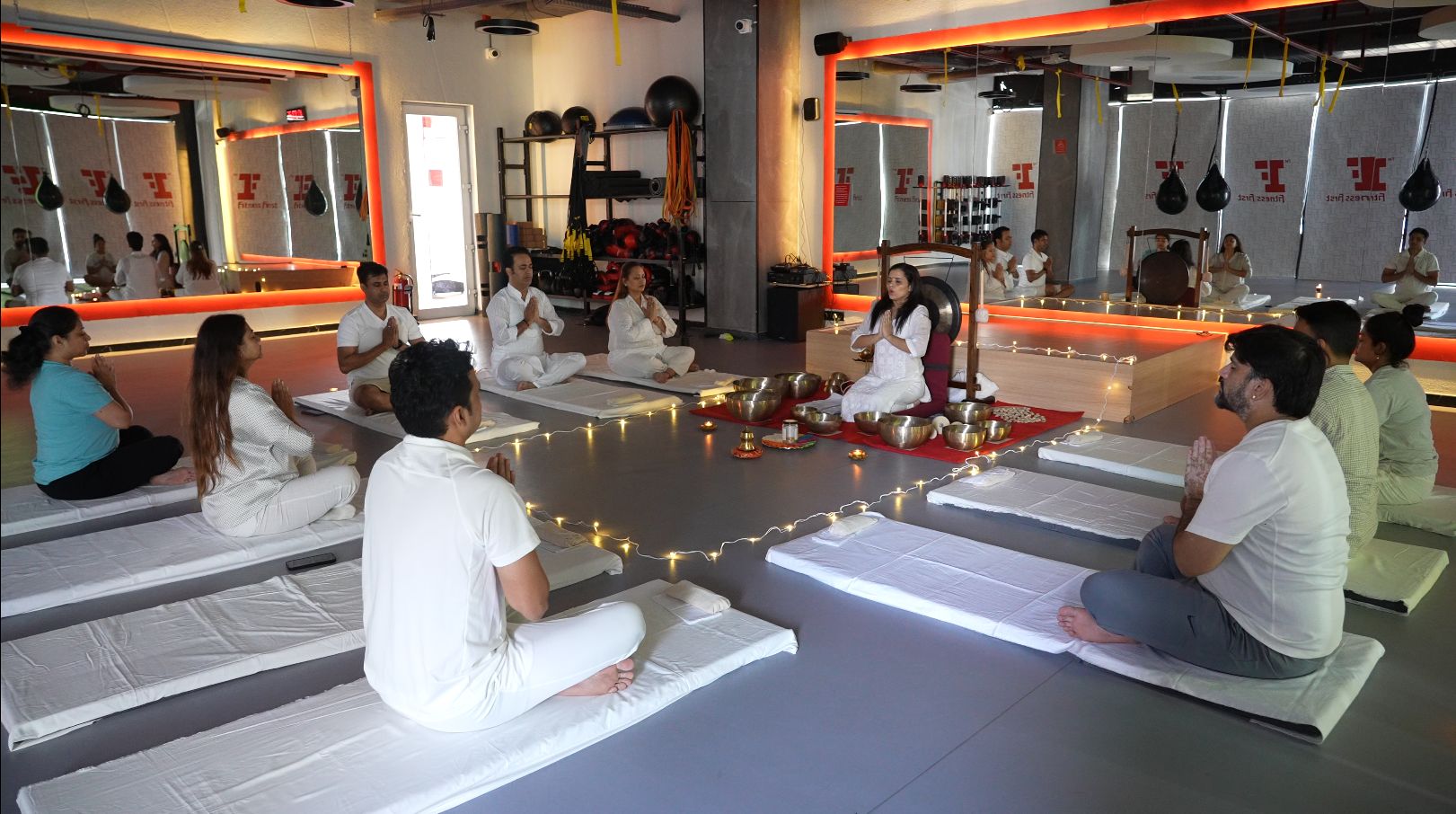
A group sound bath is a guided session where employees lie down or sit comfortably while a practitioner plays singing bowls, chimes and a gong. There is nothing to learn and nothing to perform, which is exactly why it works for mixed teams. Senior leaders and new joiners take part in the same way.
The usual length is 60 to 90 minutes, and it runs well in a conference room with the furniture pushed back. People often describe feeling calmer for the rest of the afternoon, and many mention sleeping unusually well that night. If you want to see how a session is structured, our team offsite page breaks down the timing.
Stress management workshop
A workshop adds a short, practical layer to the experience. A useful format is a 20-minute explanation of how stress affects the body, a 10-minute breathing technique people can use before a difficult meeting, and then a guided sound bath so they feel the difference instead of just hearing about it. This suits teams that respond better when there is a clear "why" behind the session. The full outline is on our stress management workshop page.
Gentle movement and breath
Yoga-based movement works well when it is slow and suitable for all bodies. Keep it short, avoid anything that makes people feel watched, and pair it with lying-down rest at the end. Fast-paced fitness sessions tend to attract the people who already exercise and lose everyone else.
A recurring series
One session is a pleasant break. A series of four weekly sessions is where people start to notice change, because the body gets repeated practice at moving from stress into rest. If your budget allows only one big spend, a short series often delivers more than a single large event.
Timing: when to schedule wellness activities
The same session can land very differently depending on the week. A few patterns we see often:
Mid-afternoon beats Friday evening. A 3 pm slot catches the post-lunch dip, and people return to work sharper. Friday evening sessions compete with commutes and weekend plans.
Before pressure, not after. Schedule sessions before appraisals, quarter-end or a product launch, not in the week after when people are already exhausted.
Use the calendar moments. Several dates give you a natural reason to run something:
- International Women's Day (8 March)
- Appraisal and year-end season (March to April)
- International Day of Yoga (21 June)
- World Mental Health Day (10 October)
- The weeks before Diwali, which are often among the most stressful of the year
Our wellness days page lists formats that fit each of these.
Book early. Good facilitators in NCR fill up from October to December. Four to six weeks' notice is sensible for single sessions, longer for offsites.
What it costs
Budgets vary widely, so it helps to know the main cost drivers: group size, location, duration and how many batches you need.
As a reference point, our group sound healing sessions run 30 to 90 minutes at your office premises or chosen venue and cost ₹1,500 per person for groups of 15 or more, with travel and instrument transportation charged extra. Larger teams usually work best as several back-to-back batches on one day rather than one very large group.
When comparing vendors, check what is included. Instruments, mats, blankets and setup time should be in the quote, not added later. Ask too whether travel to your office or offsite venue is included.
Logistics checklist for the day
Most sessions go wrong on logistics, not content. Here is what to sort out beforehand:
- Space: about two square metres per person lying down, with chairs moved to the side.
- Light: blinds or dimmable lights. Bright overhead office lighting makes it hard to settle.
- Noise: a room away from the pantry and reception, and a "session in progress" note on the door.
- Time buffers: let the facilitator set up 45 minutes before and pack down for 30 minutes after.
- Phones: ask people to switch them to silent and leave them face down or outside.
- Comfort: a note in the invite to wear comfortable clothes, and a reminder that anyone can sit instead of lie down.
- One point of contact: a single person from HR who knows the headcount and the room.
Questions to ask any wellness vendor
A few questions separate experienced facilitators from the rest:
- What training do you have? Ask for specific certifications and who issued them.
- Have you worked with teams our size? Ask which companies and what the session looked like.
- What does the session involve, minute by minute? A clear answer means they have done this many times.
- How do you handle people who are uncomfortable? Good facilitators make opting out easy and never put anyone on the spot.
- Do you make health claims? Be wary of anyone promising to cure anxiety or lower blood pressure. Wellness sessions support relaxation; they do not replace your EAP or medical care.
- Do you invoice properly and complete vendor onboarding? Saves your finance team a week of follow-ups.
How to know it worked
Attendance is the first signal, but it isn't the only one. A short anonymous survey afterwards, with two or three questions, tells you much more: How did you feel before and after? Would you attend again? What time suits you best? Ask the facilitator to share a summary with you.
Over a quarter, watch whether the same people come back and whether new people join after hearing about it from colleagues. Word of mouth inside a team is the clearest sign an activity is worth keeping.
Bringing it together
The best employee wellness activities are simple: they let people stop, they work for everyone in the room, and they leave a small habit behind. Pick one format, put it before your next busy period rather than after it, and run it properly with the right room and a clear invite.
If you are planning sessions for a team in Gurgaon or anywhere in Delhi NCR, our corporate wellness programs cover single sessions, workshops, offsites and series, and we are happy to talk through what would suit your calendar.