6 min read · 15 January 2026
What Is a Sound Bath? Benefits, What to Expect, and Who It’s For in Delhi NCR
Discover what a sound bath is in Delhi NCR: benefits, what to expect, and who it’s for. A calming sound healing guide for stress relief & sleep.
If your mind feels like it’s running multiple tabs all day, work deadlines, traffic, family responsibilities, constant notifications, you’re not alone. In Delhi NCR, the pace can be intense, and even “rest” often turns into scrolling, planning, or worrying. That’s why more people are exploring sound baths: a simple, deeply calming wellness experience that doesn’t require you to be “good” at meditation to feel the effects.
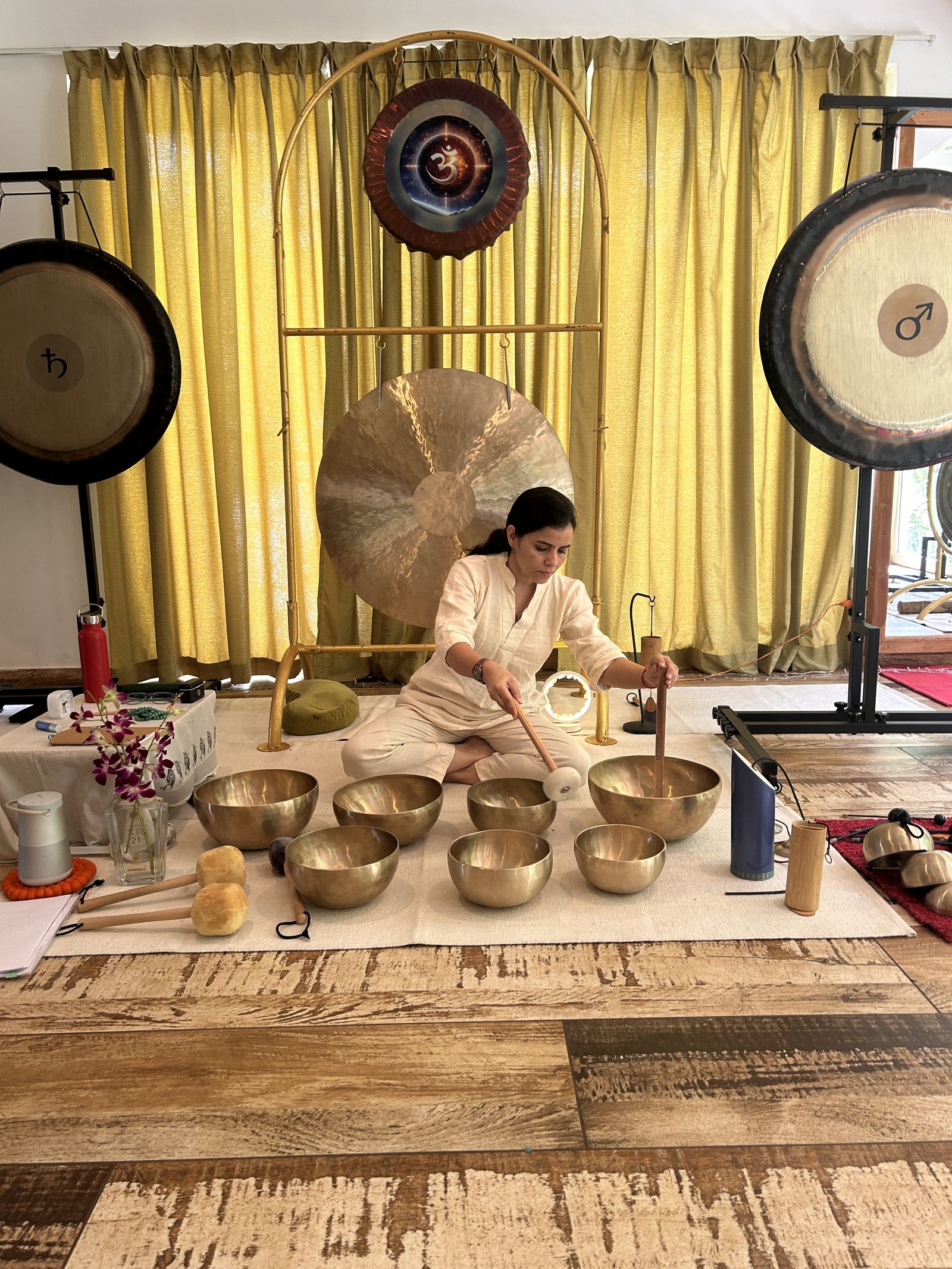
A sound bath is not a bath in water. It’s a form of sound healing where you lie down comfortably and listen to layered, resonant tones created by instruments like Tibetan singing bowls, crystal bowls, gongs, chimes, and sometimes voice. The idea is to let sound guide your nervous system into a slower state, similar to the way music can change your mood, but more immersive and intentional.
This guide breaks down what a sound bath is, the benefits people commonly report, what to expect in a session in Delhi NCR, and who it’s best suited for, so you can decide if it’s worth your time (and how to get the most from it).
What exactly is a sound bath?
A sound bath is a meditative experience where sound becomes the “anchor” for your attention. Instead of focusing on breath or repeating a mantra, you allow vibrations and tones to wash over you. Many sessions are held in yoga studios, wellness spaces, or calming community rooms across Delhi, Gurugram, Noida, and Faridabad.
While sound healing has roots in ancient traditions, think chanting, bells, and bowls used in spiritual practices, modern sound baths are typically secular and accessible. You don’t need any belief system to participate. You simply lie down, get comfortable, and listen.
The instruments used matter because they create sustained frequencies and harmonics (layers of sound) that can feel almost physical. People often describe the experience as being “massaged by sound”, not literally, but in how the body softens when the mind stops striving.
Benefits of a sound bath (what people notice most)
Sound baths aren’t a medical treatment, but many attendees in Delhi NCR try them for stress management and emotional reset. Benefits vary, yet a few patterns come up often.
- Stress relief and nervous system calming: The steady tones can encourage the body to shift out of “fight-or-flight” and into a rest state.
- Better sleep quality: Many people feel sleepy during the session or report deeper sleep the night after.
- Reduced anxiety and mental chatter: Sound gives the mind something to follow, which can interrupt overthinking loops.
- A feeling of emotional release: Some people experience tears, lightness, or a sense of “letting go,” especially after a demanding week.
- Improved focus afterward: When the brain gets a break from constant input, it often returns sharper and more centered.
A useful way to think about it is this: a sound bath doesn’t force relaxation, it creates conditions where relaxation becomes easier. For busy professionals, caregivers, students, and entrepreneurs in Delhi NCR, that can be a powerful shift.
What to expect in a sound bath session in Delhi NCR
If it’s your first time, it helps to know the flow. Most sound bath sessions in Delhi NCR last 45 to 75 minutes, though some include longer formats with breathwork or gentle movement.
Here’s what typically happens:
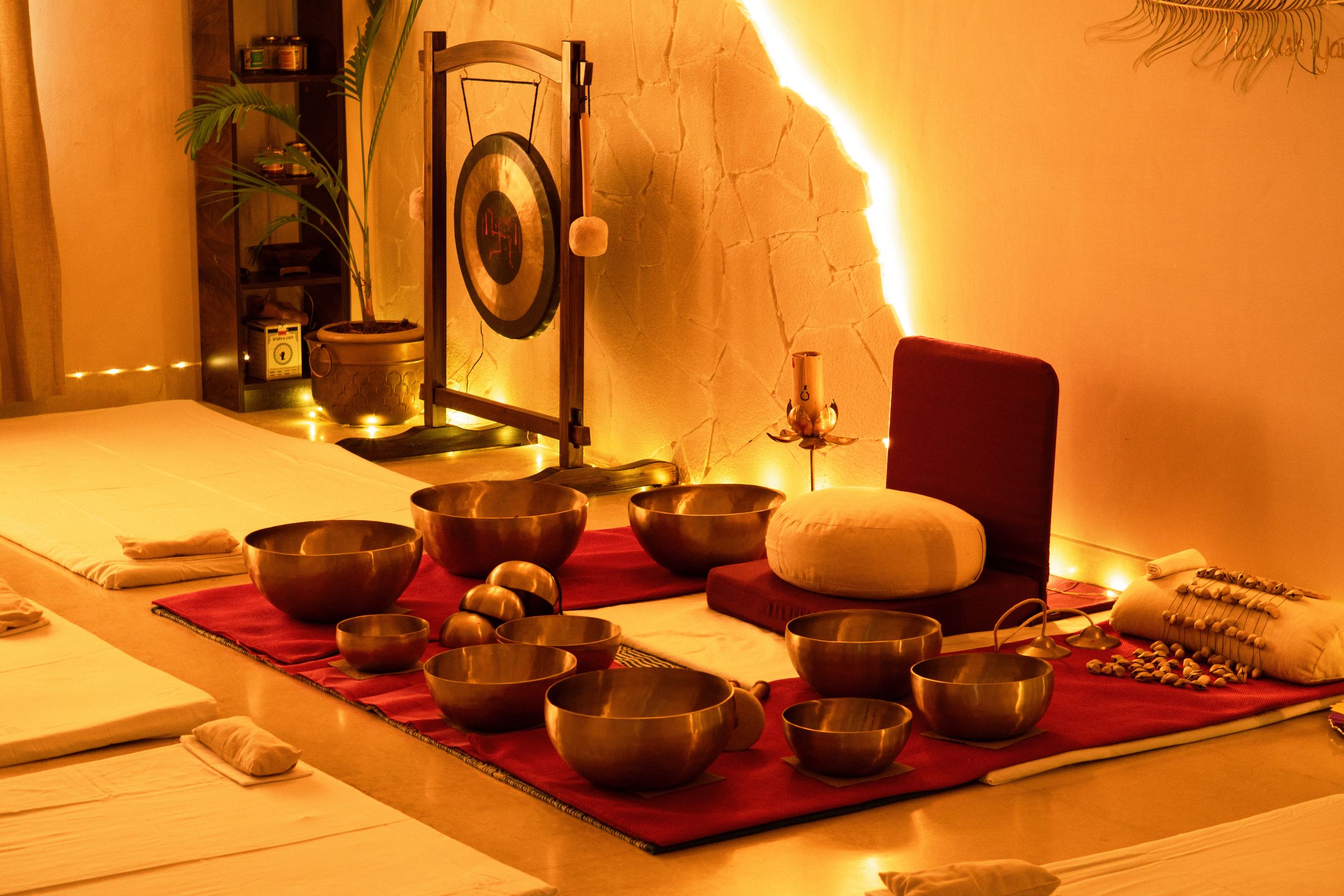
- You arrive, remove your shoes, and set up a mat with a cushion or bolster (many venues provide these, but it varies).
- The facilitator briefly explains the session and may guide a short grounding practice.
- You lie down on your back (or sit, if needed) and close your eyes.
- The sound journey begins, usually starting softly, building in intensity, then tapering into quiet.
- At the end, there’s a gentle return: silence, a few breaths, and sometimes a short sharing circle.
During the session, it’s normal for your experience to change minute by minute. You might feel deeply relaxed, drift in and out of sleep, see colors behind closed eyes, feel tingling, or simply enjoy the sounds. There’s no “correct” outcome.
One important note: sound baths can be louder than people expect, especially gong baths. If you’re sensitive to volume, tell the facilitator and choose a spot farther from the instruments.
Who is a sound bath for?
A sound bath is a great fit if you want calm without complexity. You don’t need flexibility, stamina, or prior meditation experience. It can be especially helpful for:
- Corporate professionals dealing with long hours and screen fatigue
- Students managing exam pressure or attention overload
- People who struggle to “switch off” at night
- Anyone exploring mindfulness in a non-intimidating way
- Yoga practitioners who want deeper relaxation beyond asana
In Delhi NCR, sound baths are also becoming popular as a weekend reset, something you do instead of (or alongside) brunch and errands, to start the week with more bandwidth.
Who should be cautious (and when to ask first)
Sound healing is generally gentle, but it’s not one-size-fits-all. Consider extra caution if you have:
- Sound sensitivity, migraines triggered by noise, or tinnitus
- A history of seizures (especially sound- or light-triggered)
- Severe PTSD where closing eyes and lying down in groups feels unsafe
- Recent surgery or acute medical concerns that make lying down painful
If you’re pregnant, it’s usually fine to attend, but it’s smart to check with your healthcare provider and inform the facilitator so you can be positioned comfortably and away from very intense instruments.
Sound baths are not a replacement for therapy or medical care. If you’re dealing with persistent anxiety, depression, or panic, think of sound baths as a supportive wellness practice, not the only support.
How to prepare (so you actually enjoy it)
A few small choices can make your first sound bath dramatically better.
- Wear comfortable clothes that don’t pinch when you lie down.
- Avoid a heavy meal right before; a light snack is fine.
- Bring a water bottle; hydration helps after deep relaxation.
- If you get cold easily, carry a shawl or light blanket, many people cool down when they relax.
- Arrive 10 minutes early so you’re not rushing into stillness.
If you’re worried you’ll “get bored,” don’t fight that thought. Treat it like a practice in receiving. The aim isn’t to achieve a special state, it’s to give your system permission to rest.
How to choose a good sound bath in Delhi NCR
Because sound baths are trending, quality can vary. Look for a facilitator who creates a safe environment and explains the session clearly.
When browsing options in Delhi, Gurugram, or Noida, consider:
- The venue: Is it quiet, clean, and comfortable enough to lie down?
- Group size: Smaller groups often feel more personal, especially for first-timers.
- Instruments used: Singing bowls and crystal bowls feel different from gongs; choose what you’re curious about.
- Experience and training: A good facilitator doesn’t just play instruments, they pace the session, manage volume, and close gently.
- Reviews: Search “sound bath Delhi NCR” plus the studio name to see first-hand feedback.
If you’re brand-new, start with a beginner-friendly singing bowl session before trying a louder gong bath.
FAQs: quick answers for first-timers
Will I fall asleep? You might, and that’s okay. Many people drift; you’ll still benefit from rest.
Do I need meditation experience? No. Sound baths are often easier than silent meditation for busy minds.
How often should I go? Some people go weekly; others once a month. Even one session can feel like a reset.
What should I bring? A mat and blanket if the venue doesn’t provide them. Otherwise, just come comfortable.
The takeaway: why sound baths are worth trying
In a place as fast and noisy as Delhi NCR, choosing intentional quiet can feel radical. A sound bath offers a rare combination: it’s effortless, deeply calming, and surprisingly grounding, even if you’ve never meditated before. Whether you’re seeking stress relief, better sleep, or simply a new way to unwind, a sound bath can be a gentle entry point into sound healing and mindfulness.
If you’ve been telling yourself you’ll rest “after things slow down,” consider this your sign: you don’t have to wait. Sometimes the nervous system needs an experience, not another to-do list, to remember how to relax.