8 min read · 5 August 2026
The Team That Learned to Exhale: Sound Healing as a Corporate Offsite Anchor
Why most corporate wellness fails, and how a 60-minute sound session builds team trust faster than a facilitated conversation. A case study.
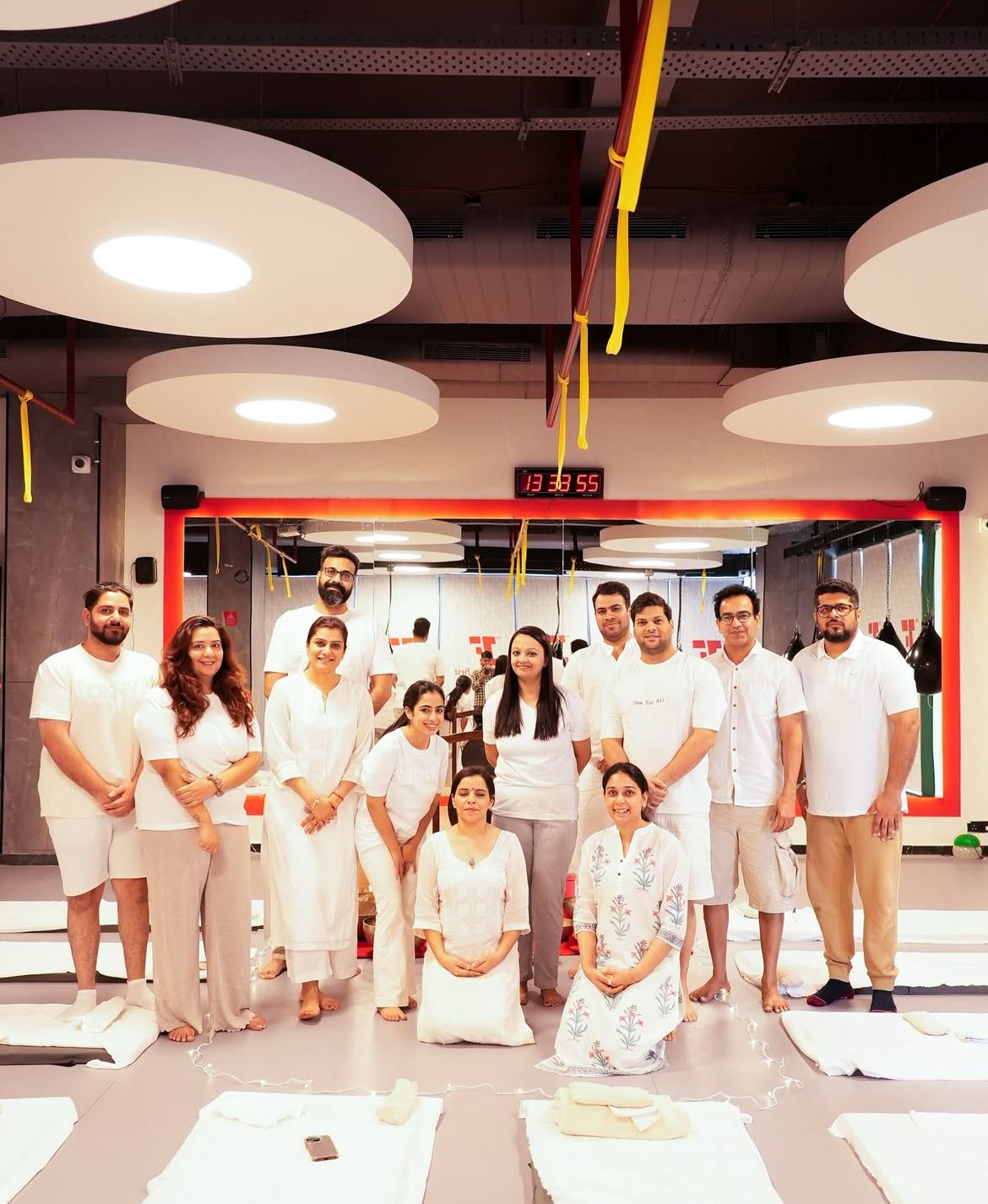
Composite case study drawn from our corporate work. Details altered for confidentiality; the pattern is representative.
The Head of People described the problem with admirable bluntness:
"We've done resilience training. We've done a mindfulness app subscription that nobody opened. We did a lunchtime yoga series and the same four people came every week. Engagement scores on wellbeing are still bottom quartile, and I'm running out of things to try that aren't just budget with a nice deck attached."
Her team of twenty-eight was not dysfunctional. It was something more common and harder to name: capable, professional, and quietly braced.
Meetings were efficient and cautious. Disagreement happened one-to-one afterwards, never in the room. Nobody was rude. Nobody was quite honest either.
Why Corporate Wellness Usually Fails
Before what worked, it's worth being specific about why the standard menu doesn't. Four reasons, and they're structural rather than about effort or budget.
It demands the resource people have run out of. Resilience training, meditation apps, and journalling programmes all require self-directed effort. Offered to a depleted workforce, they ask people to spend precisely the thing they've exhausted. Uptake is highest among those who need it least.
It requires performance. Most wellbeing interventions involve doing something visible in front of colleagues, sharing, participating, holding a yoga pose in front of your line manager. For anyone senior, junior, self-conscious, or simply private, the social cost outweighs the benefit. So they opt out, quietly.
It locates the problem in the individual. "Build your resilience" implies the deficiency is yours. When the actual driver is workload, unclear priorities, or a culture where nobody can say no, resilience training reads as being handed a raincoat and told the flooding is a personal attitude problem. People notice, and they resent it.
It's optional, so it self-selects. Opt-in programmes reach the already-converted. The people whose stress most affects the team never attend.
Any intervention that survives contact with a real workforce has to solve all four.
What We Proposed
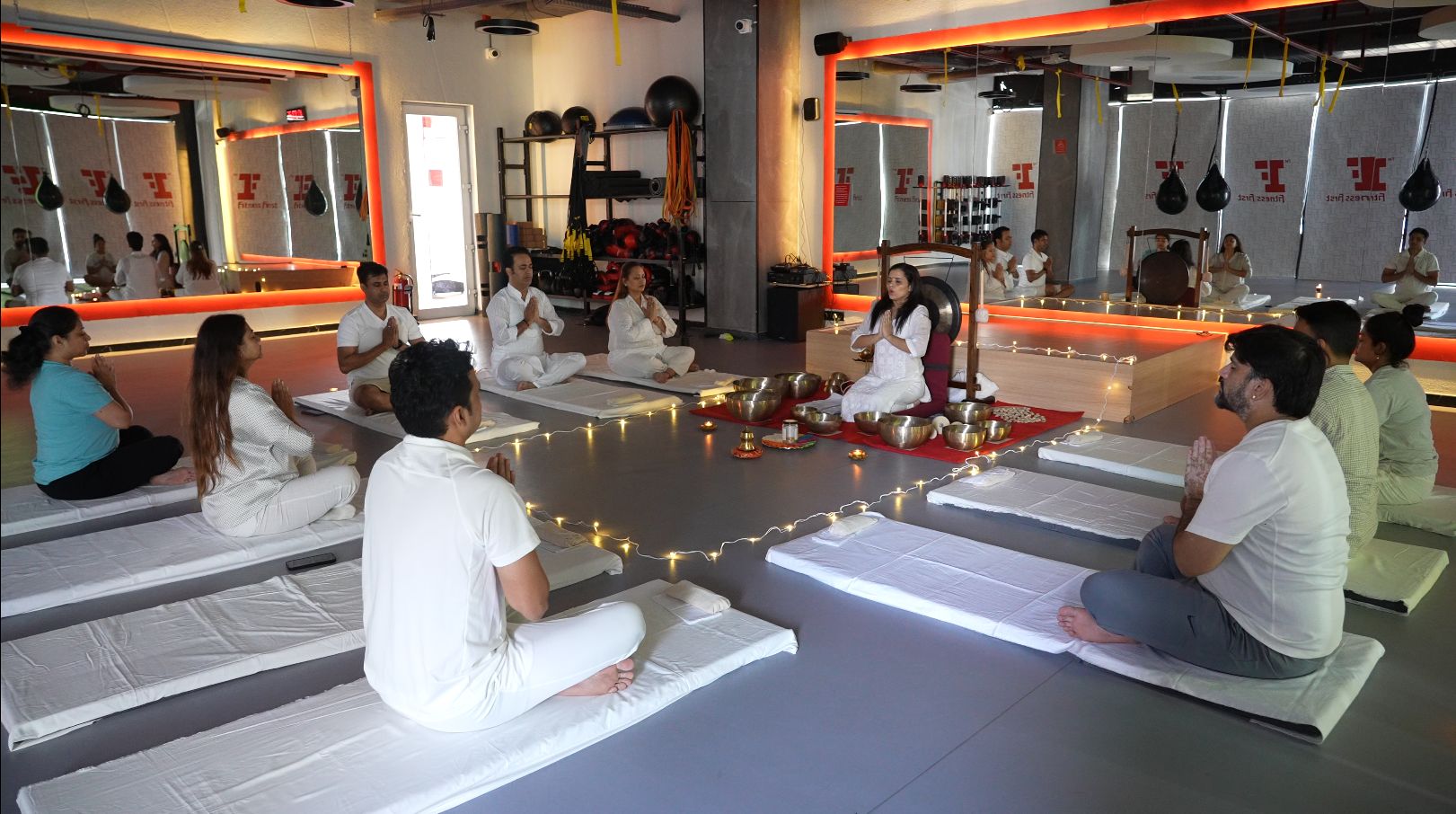
A single 60-minute sound session as the opening anchor of a two-day offsite. Not the wellness slot on the final afternoon. The first thing that happened.
The Head of People's reaction was reasonable scepticism: "They'll find it awkward. Half of them will think it's ridiculous."
Our argument for the placement, which she accepted:
It solves the four failure modes.
- No effort required, participants lie down and listen
- No performance, eyes closed, nothing visible, no way to do it wrong
- Not framed as a personal deficiency, it's a shared state change, not remedial training
- Positioned as part of the agenda rather than optional, so everyone is there
And it changes what the rest of the offsite is capable of. Two days of strategy conducted by twenty-eight braced nervous systems produces polite, cautious, low-value output. The same two days conducted by twenty-eight settled ones produces something different, and that's a business argument, not a wellness one.
What Happened in the Room
The first ten minutes were uncomfortable. They always are. Fidgeting, a few nervous glances, two people who clearly considered leaving. We expect this and don't intervene.
Around minute twelve, the room settled. This shift is remarkably consistent and quite audible, breathing slows and deepens collectively. There's a specific quality of silence a room acquires when everyone in it stops bracing at the same time.
By minute thirty, several people were asleep. Including, notably, the CTO, who apologised afterwards and was told, accurately, that falling asleep is the session working rather than failing.
At the end, nobody moved for about ninety seconds. Also typical. And it does something specific to a group: they have now shared a completely non-transactional experience, which for most colleagues has never happened once.
Why This Works Better Than a Facilitated Conversation
The counter-argument is obvious: if the goal is trust and honesty, why not just facilitate a conversation about trust and honesty?
Because of a sequencing problem.
Psychological safety is a nervous system state before it's a cultural one. Dissent requires tolerating a moment of social threat. An activated nervous system cannot tolerate that, it will choose silence every time, regardless of what the values poster says. You can't declare your way into safety when the physiology is against you.
Co-regulation is faster than conversation. Nervous systems in proximity influence one another. A room that settles together is doing something older and more direct than a discussion: providing continuous evidence to each person that the environment is safe. This is why the effect is different from everyone listening to the same recording alone at home.
It bypasses the vulnerability barrier. Trust exercises ask people to be vulnerable first, which is precisely what an untrusting group cannot do. A sound session produces the shared experience without requiring anyone to disclose anything. The vulnerability happens afterward, when it's affordable.
Anyone can do it. No belief system, no flexibility, no prior experience, no language requirement. Across a group spanning several nationalities, a range of religious backgrounds, and ages from 24 to 58, everyone can lie down and listen.
What Changed Over the Two Days
Day one, morning session, immediately after. Two people raised objections to the strategy in open session, one of them fairly junior. The Head of People's note to us afterwards: "That does not happen in our meetings. It has never happened in our meetings."
Day one, afternoon. Discussions ran longer with less interruption. People finished their sentences. There was tolerance for silence while somebody thought, one of the most reliable indicators of a settled room, and one that stressed groups cannot produce.
Day two. The difficult conversation the offsite existed to have, about resourcing and competing priorities across two teams, actually happened. It had been deferred through three previous offsites.
Four weeks later. Follow-up survey: 24 of 28 rated the session positively, and 19 asked whether it could become regular. Free-text comments most frequently mentioned "I didn't realise how tense I was", which is interoception being restored, and arguably the single most valuable outcome for a workforce.
What Happened Next: The Ongoing Programme
The offsite session became a doorway rather than a one-off. What they implemented:
Monthly team session, 45 minutes. In-office, mid-afternoon, blocked in the shared calendar. Attendance optional but scheduled, which sounds like a small distinction and isn't. A calendar block signals organisational permission; "available if you want it" signals the opposite.
Recorded 10-minute sessions. Made available to everyone for end-of-day use. Uptake was modest, as expected. Recordings work best for people already converted by a live experience.
Pre-crunch sessions. Before high-intensity periods, a product launch, quarter-end. This proved the highest-value application. Entering a demanding period from a settled baseline rather than an already-elevated one meaningfully changes how the team comes out the other side.
Leadership-only sessions, quarterly. Separate from the wider team, because leaders behave differently when their reports are in the room, and because leadership regulation propagates downward through an organisation whether anyone intends it to or not.
The Honest Limitations
If you're evaluating this for your organisation, you deserve the caveats.
It does not fix a workload problem. If your team is under-resourced and over-committed, a sound session is a pleasant hour inside an unsustainable system. Worse, it can become a fig leaf, evidence that "we're addressing wellbeing" while the actual cause is untouched. We will say this to you directly before taking a booking, and we've declined work on this basis.
It does not fix bad management. If a specific manager is generating the stress, the intervention is that manager, not an offsite activity.
Roughly one in eight won't enjoy it. Some people find lying still with eyes closed among colleagues uncomfortable, and that's legitimate. Always make sitting up an option and never single anyone out. Voluntary participation, even within a scheduled block.
Some people surface difficult material. Occasionally participants become tearful or find something unexpected arising. Have a facilitator who can handle it calmly and a quiet space available. This is uncommon but should never be a surprise.
One session isn't a programme. The offsite session produced a clear shift, but the durable change came from the monthly cadence. Treating this as a one-off event is buying an experience rather than an outcome.
The Business Case, Stated Plainly
Strip out the wellness framing and it reduces to this:
Your team's output is decisions and communication. Both degrade measurably under sustained nervous system activation, shorter time horizons, distorted risk assessment, fewer generated options, lower tolerance for dissent.
An hour of collective downshift is not a perk. It's maintenance on the instrument that produces everything else your organisation sells.
The Head of People's summary, six months in:
"It's the only wellbeing thing we've run where people ask when the next one is. And it's the only one where I can point at a specific conversation we had because of it."
That last part is what separates a wellness gesture from a wellness programme.
If You're Considering This
Place it at the start, not the end. As the anchor that changes the rest of the agenda, not the pleasant thing you do once the real work is finished.
Schedule it; don't offer it. Optional means the people who most need it won't come.
Have leadership attend. A session leaders skip communicates precisely what everyone will conclude it communicates.
Commit to a cadence. One session is an experience. A quarterly rhythm is a change.
Fix the structural stuff too. Please. Regulation practice alongside honest work on workload and clarity works. Regulation practice instead of it is something people see through immediately, and resent.
Astitv Boddh designs corporate sound healing programmes for offsites, leadership teams, and ongoing wellbeing cadences. We'll tell you honestly if we don't think it's the right intervention for your problem.